
Sulabh International Social Service Organisation marked International Women’s Day 2026 with a day of reflection, dialogue, and celebration through a special conference titled “Give to Gain: Women & Livelihood: Building Equitable Futures,” held on 8 March 2026 at Bhim Auditorium, Dr Ambedkar International Centre, New Delhi.
Bringing together policymakers, social leaders, entrepreneurs, academics, journalists, and grassroots changemakers, the event created a powerful platform to explore how women’s leadership and livelihoods are shaping more equitable futures.
The day began with an Exhibition on Women’s Empowerment & Livelihood, where women associated with Sulabh’s livelihood and skill development initiatives showcased products developed through their training and entrepreneurship programmes. Visitors engaged with stalls displaying Madhubani paintings, apparel featuring Madhubani art, handicrafts, papad and achaar, jute bags, sanitary napkins, dhurries, and nutritious produce such as millets and makhana.
More than an exhibition, it offered a glimpse into the journeys of women who are transforming their lives through skill, resilience, and collective effort.
A Gathering of Voices for Change
The opening session set the tone for a day dedicated to celebrating women’s leadership, dignity, livelihoods, and collective action towards building a more equitable future.
The gathering began with a welcome address by Smt. Nitya Pathak, Executive Convener, Sulabh International Social Service Organisation, who warmly welcomed the distinguished guests, speakers, and participants. In her remarks, she emphasised the importance of collective action, community participation, and sustained efforts in advancing dignity, opportunities, and livelihoods for women across India.
A short film tracing Sulabh’s journey of social reform and empowerment set the tone for the day, reminding the audience of the organisation’s long-standing commitment to dignity, equality, and social transformation.
The conference was honoured by the presence of Sadhvi Bhagawati Saraswati Ji, President, Divine Shakti Foundation, Parmarth Niketan Ashram, Rishikesh, as the Chief Guest. In her inspiring address, she reflected on the deeper meaning of empowerment and the transformative role women play in society.
“When women have dignity, safety, and opportunity, they don’t just transform their own lives — they transform the world.”
— Sadhvi Bhagawati Saraswati Ji
The inaugural session was further graced by our Guests of Honour — Ms. Divya Dutta, eminent actor and author, and Dr Shovana Narayan, Padma Shri awardee, renowned Kathak dancer, and former civil servant.
We were also honoured by the presence of Mrs. Amola Pathak, who joined the inaugural session and extended her support to the celebration of women’s leadership and empowerment.
Several distinguished dignitaries also addressed the gathering, including Dr Tanzaire Vashishtha, Honorary Representative of The Peace and Sports Council of Afghanistan in India; Ms. Usha Jha, President of Bihar Mahila Udyog Sangh; Ms. Swati Kovind, Founder of Sahyog; and Dr Aruna Abhey Oswal, Chairperson of the Aruna Abhey Oswal Trust and Oswal Group of Companies.
Conversations on Livelihood, Ecology, and Enterprise
The first thematic session, “Women, Ecology and Livelihood,” moderated by Ms. Nirja Bhatnagar, Director – Program, Policy & Advocacy, Sulabh International, explored the link between women’s leadership and sustainable development.
Speakers including Dr Vaishali Patil, tribal women’s rights activist; Dr Ritu Dewan, Professor and Director (Research) at the Mumbai School of Economics & Public Policy; Ms. Nisha Madan Jha, former Chairperson of the Bihar Commission for Protection of Child Rights; and Mr. Ashwin Bhosale, Director – HSE and Corporate Responsibility at Sodexo India, highlighted how women are playing a central role in protecting ecosystems and strengthening community resilience.
As Dr Ritu Dewan noted during the discussion:
“Women’s work in agriculture, food systems, and local economies often remains invisible. Recognising and supporting this leadership is essential for sustainable development.”
The second session, “Women’s Enterprises & Skills – Pathways to Economic Autonomy,” moderated by Ms. Deepali Bhattacharya, Gender and Monitoring & Evaluation Expert, focused on entrepreneurship and skill development as drivers of economic independence.
Speakers such as Dr Swapna Mishra, CEO of the Textile Sector Skill Council; Ms. Sangita Bhagat, Vice President and CSR Head of Our Mitti Foundation; Dr Shobha Chaubey, Senior Advocate at the High Court, Patna; and Ms. Ekta Sansanwal, Founder of Ekta Foundation, shared their experiences on building inclusive ecosystems for women entrepreneurs.
Their discussions underscored a common message: when women gain access to skills, markets, and financial resources, they are able to create sustainable enterprises that strengthen both households and local economies.
Grassroots Voices and Stories of Resilience
The third session, “Grassroots Voices – Stories of Resilience & Livelihood Innovation,” moderated by Ms. Sonam Mishra, Honorary Vice President, Sulabh International, placed the spotlight on lived experiences.
Speakers included journalist Ms. Aarti Dhar; Ms. Sangita Pandey, former journalist with Hindustan Times; Ms. Anupama Jha, Founder Director of Initiatives for Transparency and Accountability; and writer Ms. Geeta Sri, who shared perspectives on how education, awareness, and collective action enable women to overcome social and economic barriers.
Shri Manoj Tiwari, Hon’ble Member of Parliament from North East Delhi, also graced the conference with his presence. We were honoured that he took time out of his busy schedule to attend the programme and share his thoughts on the importance of empowering women and strengthening livelihoods at the grassroots.
In his remarks, he observed:
“When women at the grassroots are empowered with knowledge and opportunity, they transform not just their own lives but the future of their communities.”
Adding a memorable cultural touch to the evening, Shri Manoj Tiwari also mesmerised the audience with his singing, which was warmly received by everyone present.
Documenting Change Through Research and Publications
Two significant publications were released during the event, reflecting Sulabh’s ongoing work in documenting and strengthening women-led development.
The first publication, “Give to Gain: Women, Dignity, Livelihood and Social Transformation,” explores how women’s leadership and economic participation are creating meaningful change across several states in India.
The second publication, “Impact Assessment Report: Women-Led Sustainable Livelihoods in Sangamner and Akole Blocks, Maharashtra,” documents the outcomes of a collaborative initiative between Sulabh International and Sodexo – Stop Hunger.
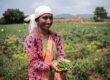
The report highlights how women farmers revived indigenous seeds, cultivated kitchen gardens, adopted organic farming practices, and strengthened local food systems. These efforts have improved household nutrition, reduced dependence on costly agricultural inputs, and enhanced women’s role in agricultural decision-making.
Together, the publications reflect Sulabh’s enduring commitment to restoring dignity and opportunity, continuing the vision of the organisation’s founder Dr Bindeshwar Pathak (Padma Vibhushan).
Celebrating Women Through Art and Culture
The event concluded with a vibrant cultural programme.
The performances included poetry recitation by Dr Kalpana Kumari, teacher at Sulabh Public School; musical performances by vocalist Dr Sushmita Jha; a traditional Jhijhiya dance by students of Sulabh Vocational Training Centre; and a powerful drama titled “Chuppi Todo Udan Bharo” performed by students of Sulabh Public School.
One of the most inspiring moments of the evening was a Ramp Walk celebrating grassroots women leaders. Women artisans, farmers, and community leaders from regions including Vrindavan, Varanasi, Bihar, Darbhanga, Maharashtra, Kushinagar, Uttarakhand, Alwar, and Tonk walked the stage with confidence and pride.
Each step symbolised resilience, self-belief, and the collective strength of women who continue to redefine possibilities within their communities.
As the event drew to a close, the message of the day remained clear: when women are given the opportunity to learn, lead, and thrive, the benefits ripple far beyond individuals.
In the spirit of “Give to Gain,” empowering women is not only an act of justice — it is an investment in stronger families, resilient communities, and a more inclusive future.