Our Work / Social Justice
Liberation and Rehabilitation of Manual Scavengers
How Dr Bindeshwar Pathak Restored Dignity to India’s Most Marginalised Women
Sulabh International Social Service Organisation
Our Work / Social Justice
How Dr Bindeshwar Pathak Restored Dignity to India’s Most Marginalised Women
Sulabh International Social Service Organisation
In India, manual scavengers — women who cleaned dry latrines by hand — endured some of the most severe social discrimination the country had ever seen. They belonged to the lowest stratum of India’s caste-based society, historically branded as “untouchables,” and were subjected to conditions that stripped them of dignity and humanity. Though a law was passed in 1993 to prohibit manual scavenging, the 2011 Census revealed that over 740,000 households across India still relied on the practice, with women bearing almost the entire burden.
It was against this backdrop that Dr Bindeshwar Pathak — founder of Sulabh International and recipient of the Padma Vibhushan — dedicated his life to changing this reality. Since the organisation’s inception in 1970, he launched a nationwide movement that liberated over 200,000 women from the inhuman occupation of manual cleaning of toilets and rehabilitated them into mainstream society. The most visible proof of his success lay in two towns in Rajasthan — Alwar and Tonk — where his five-point intervention programme transformed not just livelihoods, but lives.
The Beginning
Dr Pathak’s lifelong mission had its roots in a single, unforgettable moment in 1968. As a young man, he had joined the Bihar Gandhi Centenary Celebrations Committee — set up to honour Mahatma Gandhi’s 100th birthday and his dream of a more equal India. The committee sent him to Bettiah, a town in Bihar, to live among and understand the sufferings of communities that had long been treated as outcasts.
It was there that he witnessed the brutal reality of caste discrimination. But one incident cut deeper than all the others:
“I was joining my friends for a cup of tea in Bettiah town when I saw a boy in a red shirt being attacked by a bull. As people rushed to save him, someone in the crowd shouted that the boy was from a colony where the ‘untouchables’ lived. Upon hearing this, everyone backed away and abandoned him. We quickly ran to help and took him to a hospital, but unfortunately, the boy did not survive. That day, I vowed to dedicate my life to the emancipation of people labeled as ‘untouchables.'”
— Dr Bindeshwar Pathak
That vow became the foundation of everything that followed.
The Approach
Dr Pathak understood early on that freeing women from manual scavenging required more than goodwill — it required a structural alternative. He recognised that while dismantling the caste system was beyond the reach of any single individual, placing income and skills in the hands of women could shift power dynamics both within households and across society.
“The problem of ‘untouchables’ is as much economic as it is socio-cultural. Traditions take time to change and require the will and initiative of all sections of society. Skill development is crucial for someone who is illiterate and from the oppressed class. By giving them an alternative livelihood, they are liberated from an inhumane job. Their dignity is restored and they are gradually accepted by society.”
— Dr Bindeshwar Pathak
This conviction shaped what became Sulabh’s five-point rehabilitation programme — a model that was first proven in Alwar and Tonk, and went on to guide Sulabh’s work across the country.
The Model
Eliminating the Source
The first step was to remove the very infrastructure that made manual scavenging necessary. Dr Pathak’s team converted dry pit latrines into Sulabh twin-pit pour-flush toilets, ending the need for anyone to manually handle human excreta.
Literacy and Education
A vocational training centre — named Nai Disha, meaning “New Direction” — was established to give women their first access to education. They were taught to read and write, and for the first time, many learned to sign their own names. Dr Pathak believed deeply that education was the foundation of all human development, and this centre became the heart of the rehabilitation effort.
Building Financial Independence
To encourage women to attend the centre, stipends were paid in cash for the first three months. Once women learned to sign their names, payments shifted to cheques — a deliberate step that nudged them towards opening bank accounts and beginning to save. For many, this was the first time they had ever exercised control over money.
Skill Development and Livelihoods
Dr Pathak then ensured women had the tools to earn a living with dignity. In Alwar and Tonk, women were trained as beauticians, in food processing, sewing, embroidery, and personality development. Those who once cleaned latrines became skilled professionals, running their own small enterprises and serving the very communities that had once excluded them.
Social Reintegration
Dr Pathak personally visited women at their homes, offering encouragement and support that went far beyond formal training. His presence and belief in them strengthened their determination. Upper-caste families that had once barred these women from entering their homes began inviting them in — as beauticians, and even as guests at weddings. The change in Alwar and Tonk became an inspiration for communities in other towns.
Breaking Barriers
Dr Pathak was determined to challenge the notion of the “twice-born” — the idea that birth into a higher caste conferred a higher humanity. He believed, and demonstrated, that all humans are born equal.
In 1988, he took one of his most symbolic and courageous steps: he personally led hundreds of women from formerly “untouchable” communities to the Nathdwara Temple in Rajasthan — a place they had been forbidden from entering. Rather than confrontation, he chose persuasion, working patiently with priests until they agreed to open the temple doors. The moment was historic, and was acknowledged by then Prime Minister Rajiv Gandhi.
“Affirmative actions, such as those I initiated, hold deep symbolic significance. They were intended to uplift the entire community, not just individual members. When a whole community is empowered, the dynamic shifts — others aspire to emulate that success, and the community becomes a model to follow.”
— Dr Bindeshwar Pathak
Global Recognition
The journey that began in the lanes of Bettiah eventually reached the halls of the United Nations.
In 2007, women rehabilitated under Dr Pathak’s programme attended the World Toilet Summit at Vigyan Bhawan in New Delhi, where they were received in audience by Prince Willem-Alexander of the Netherlands — now King of the Netherlands. That encounter opened another door: in 2008, the United Nations Economic and Social Council (UN-ECOSOC) invited these women to attend proceedings at the United Nations headquarters in New York.
There, they walked the ramp alongside celebrated models from India and the United States. They visited the Statue of Liberty — a monument to freedom, equality, and human dignity. Standing before it, the women who had once been called “untouchable” declared to the world that they were untouchable no more.
It was the most powerful testament to what Dr Bindeshwar Pathak had always believed: that dignity is not a privilege to be granted by society, but a right that belongs to every human being — and that with the right support, even the most marginalised can reclaim it.
Dr Pathak’s work through the Nai Disha programme left behind more than rehabilitated women and converted latrines. He left behind a model — one that showed how sanitation reform, education, economic empowerment, and social inclusion, working together, could undo centuries of caste-based oppression. The Nai Disha programme continues to guide Sulabh International’s work today, ensuring that no individual is forced into a degrading occupation, and that every person — regardless of the circumstances of their birth — has the opportunity to live with dignity.
Documentary
Further Reading
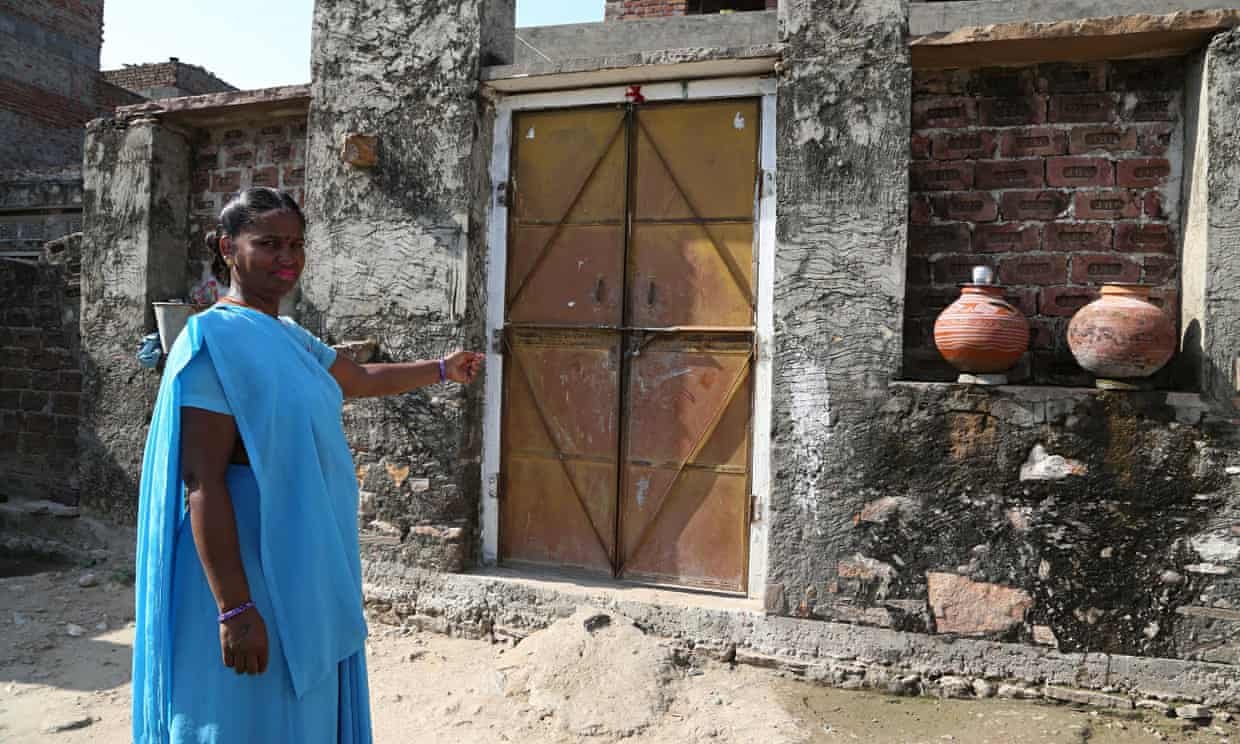
The Guardian · Feature
How Nai Disha Broke the Cycle of Caste for India’s Manual Scavengers
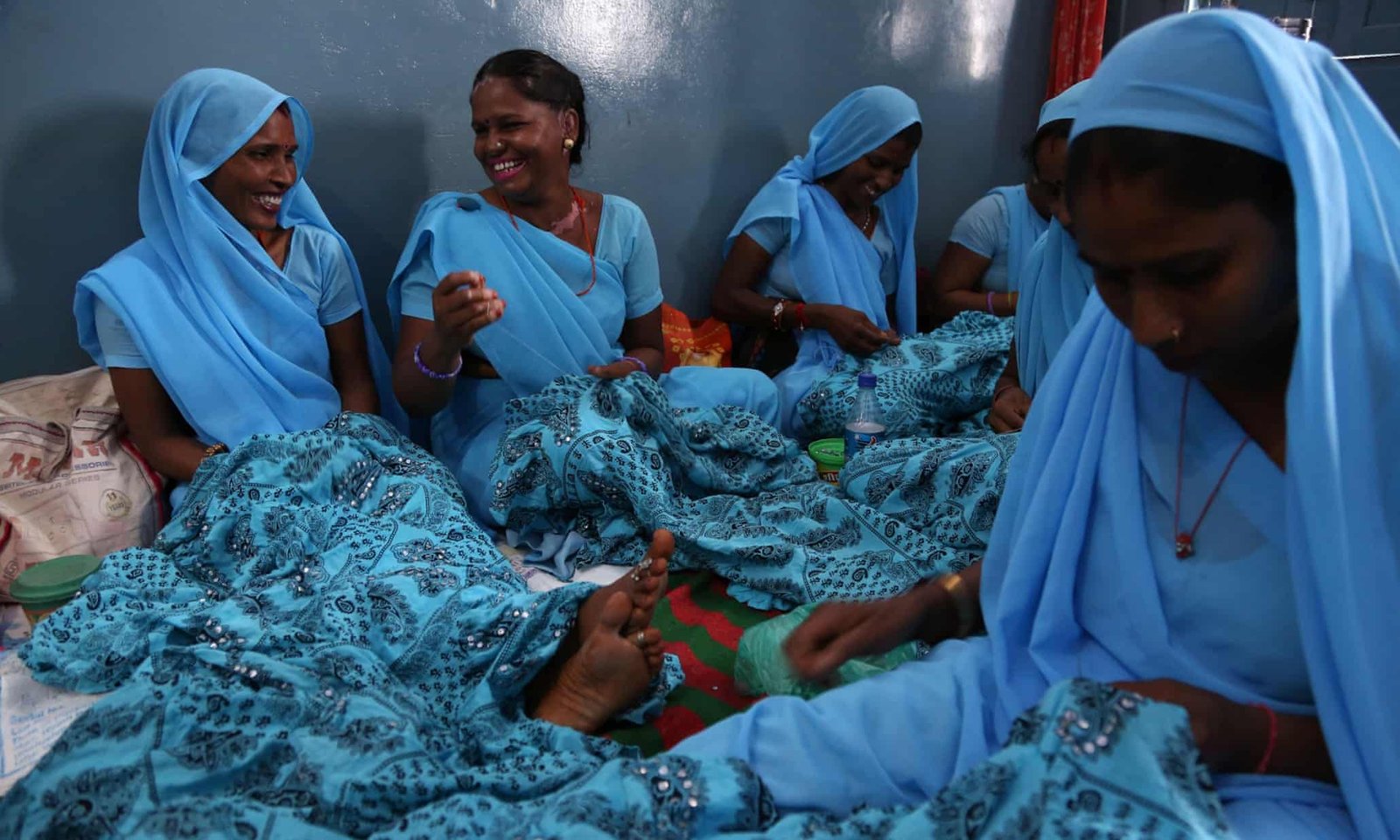
The Guardian · Photo Essay
From Latrine Cleaners to Seamstresses: A Visual Story of Transformation
Sulabh International · Life Story
Usha Chamur: From Manual Scavenger to Padma Shri Recipient